
 België
 Denmark
 Deutsch
 Español
 Finland
 Français
 Nederlands
 Sweden



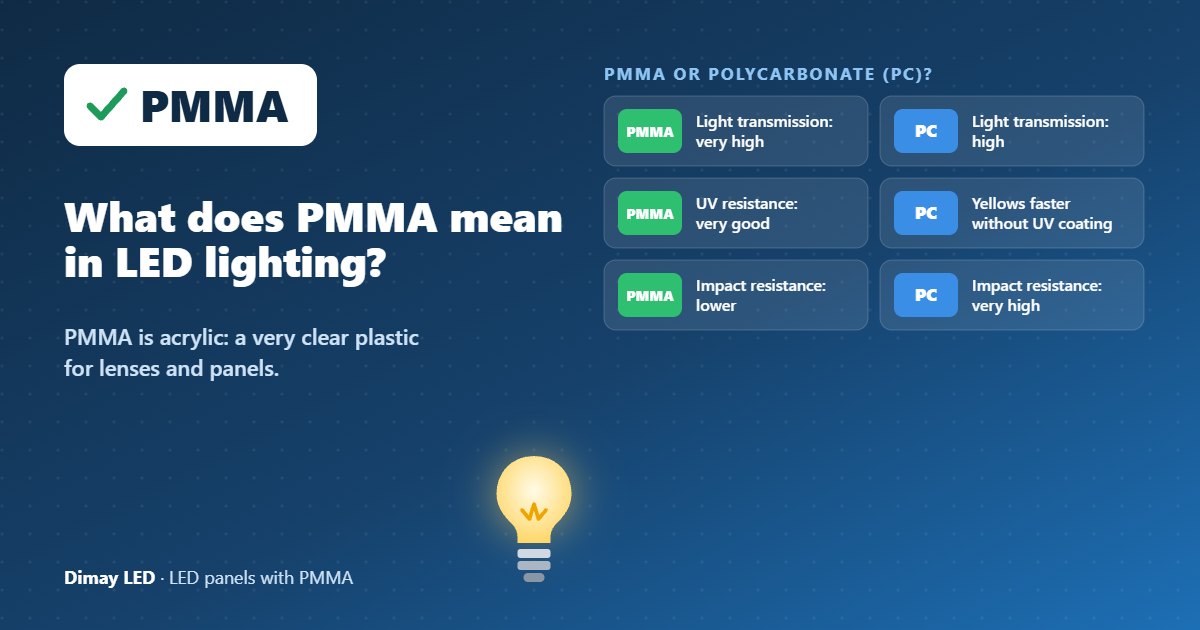
PMMA stands for polymethyl methacrylate, better known as acrylic or Plexiglas. In LED lighting, PMMA is used for lenses, covers and light guide plates. The material lets a lot of light through, stays clear and hardly yellows under the influence of UV light.
Benefits of PMMA
- High light transmission: approx. 92% of the light passes through, comparable to glass.
- UV-resistant: hardly yellows, even after years of use.
- Lightweight: about half the weight of glass.
- Easy to mould: ideal for lenses and light guides in LED panels.
- Resistant to many chemicals and ammonia: which makes it suitable for livestock barns and agricultural buildings.
PMMA or polycarbonate (PC)?
| PMMA (acrylic) | Polycarbonate (PC) | |
|---|---|---|
| Light transmission | very high | high |
| UV resistance | very good | yellows faster without a UV coating |
| Impact resistance | lower | very high |
| Typical application | lenses, panels, barn lighting | impact-resistant covers, sports halls |
Where is PMMA used?
In LED panels, a PMMA light guide plate distributes the light from the LEDs at the edge evenly across the whole panel. In LED barn lighting, a PMMA housing is used because it is resistant to ammonia and intensive cleaning.
Frequently asked questions
Is PMMA the same as Plexiglas?
Yes, Plexiglas is a well-known brand name for PMMA (acrylic).
Does PMMA turn yellow in the sun?
Hardly; PMMA is inherently very UV-resistant.
Is PMMA fragile?
PMMA is less impact-resistant than polycarbonate. For places with a high risk of impact, polycarbonate is more suitable.


