
 België
 Denmark
 Deutsch
 Español
 Finland
 Français
 Nederlands
 Sweden



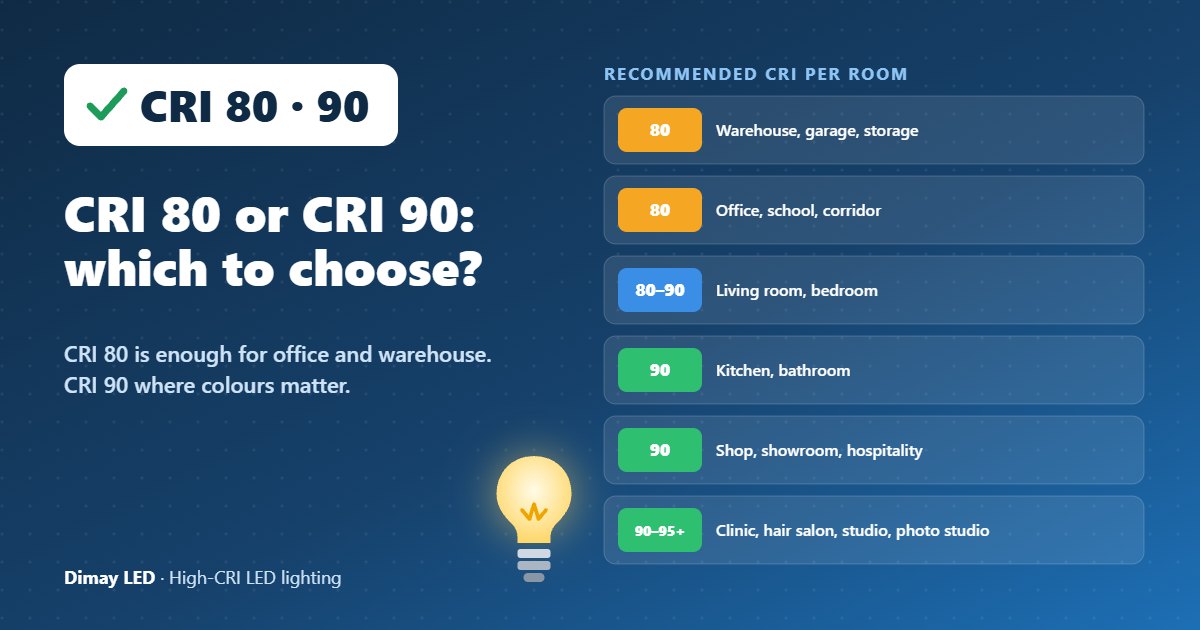
For most offices, schools, warehouses and homes, CRI 80 is sufficient. Choose CRI 90 or higher where colours really matter, such as in shops, showrooms, kitchens, clinics and hair salons. CRI (Ra) indicates how true to life colours look under a lamp; the higher, the more realistic.

The difference in practice
Under CRI 80, colours look good, but some shades, such as red and skin tones, are slightly less vivid. Under CRI 90, colours are richer and more natural. The difference is most noticeable with products, food, clothing and people.
Which CRI for which room?
| Room | Recommended CRI |
|---|---|
| Warehouse, garage, storage | 80 |
| Office, school, corridor | 80 |
| Living room, bedroom | 80 to 90 |
| Kitchen, bathroom | 90 |
| Shop, showroom, hospitality | 90 |
| Clinic, hair salon, studio, photo studio | 90 to 95+ |
Does CRI 90 use more energy?
LEDs with a high CRI often have slightly fewer lumens per watt. The difference is usually small, and in rooms where colour matters, the better appearance easily outweighs the small difference in consumption.
More about CRI
Read the full explanation in what CRI (colour rendering index) means. Also take a look at our LED panels with CRI90 and AR111 spotlights for shops.
Frequently asked questions
Is CRI 80 good enough for an office?
Yes, the EN 12464-1 standard requires a CRI of at least 80 for offices.
When should I choose CRI 90?
In rooms where colours are important: shops, kitchens, clinics and showrooms.
Can you see the difference between CRI 80 and 90?
The difference is clearly visible especially with red shades, food and skin tones.


