Order VAT-free? Open a business account and benefit!

Page 3 - Blog

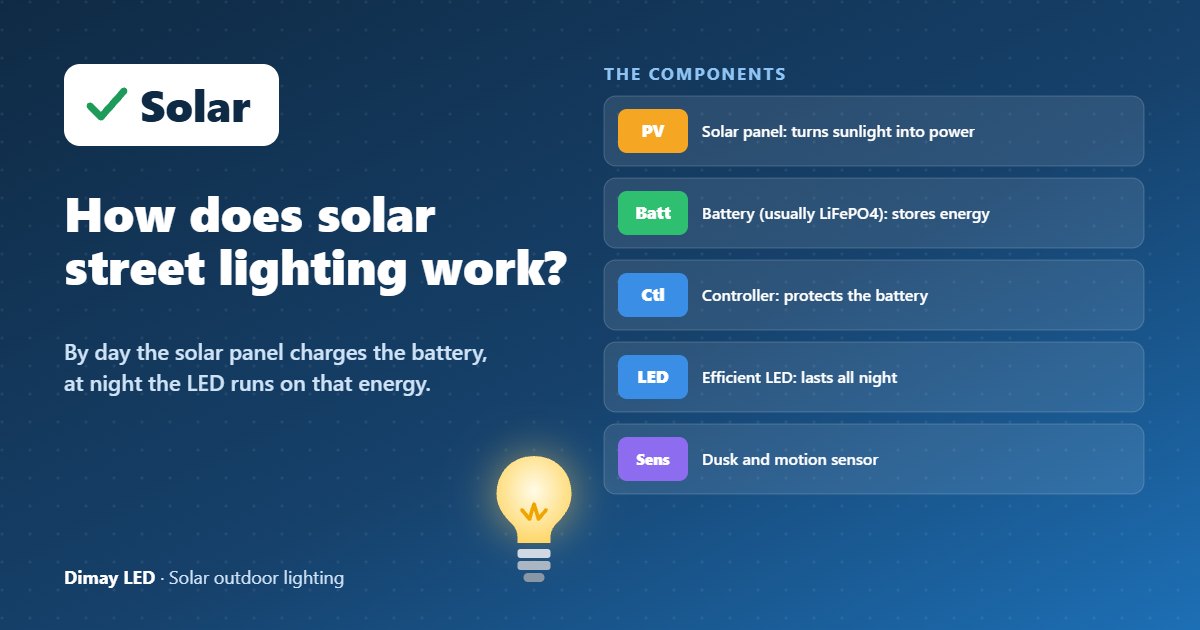
  1. How does solar street lighting work?

    Infographic: How does solar street lighting work?
    Solar street lighting charges a battery with a solar panel during the day and runs on that energy at night. No power cable is needed.
    Read more »
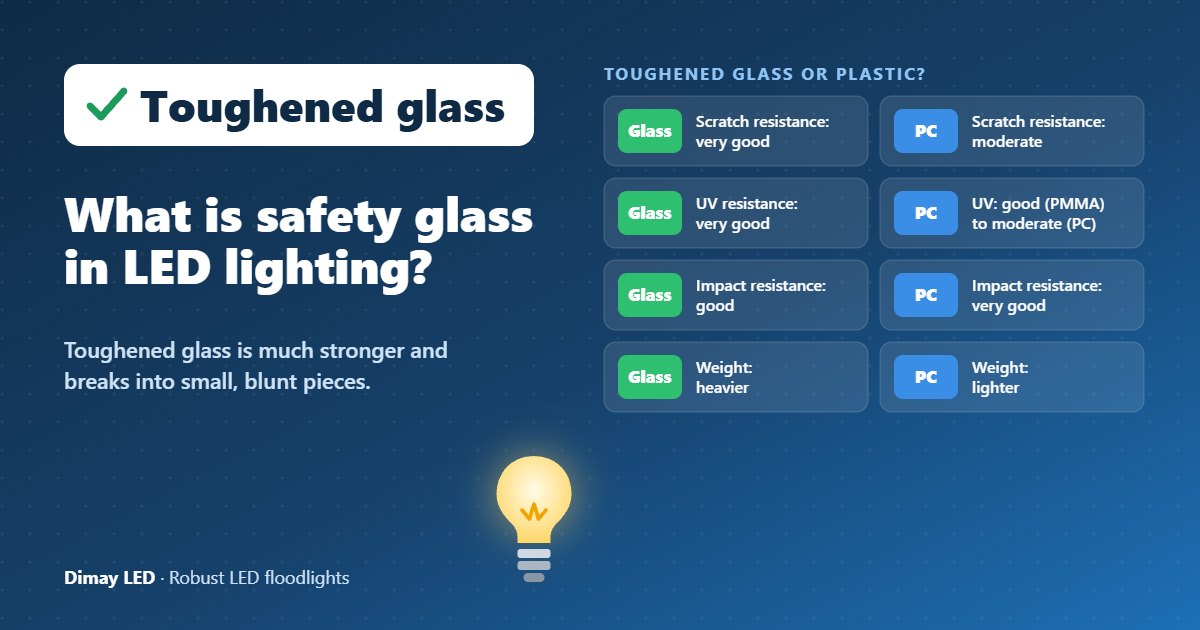
  2. What is safety glass in LED lighting?

    Infographic: What is safety glass in LED lighting?
    Safety glass in LED luminaires is toughened glass: stronger than ordinary glass, and it breaks into small, blunt pieces. Ideal for site lights and street lighting.
    Read more »
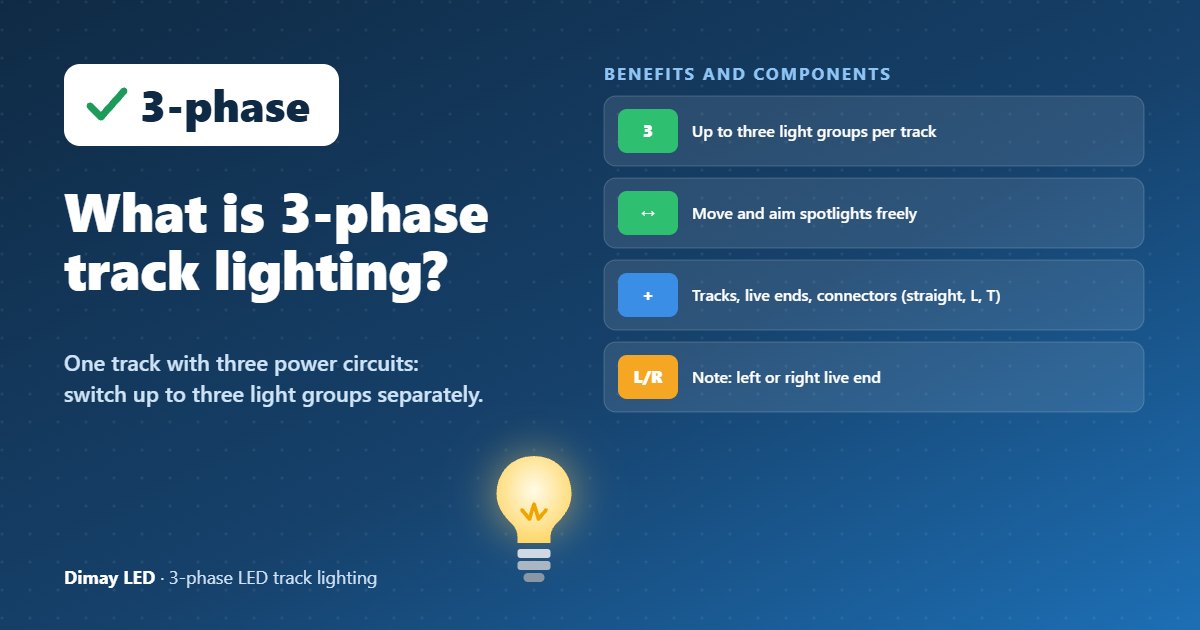
  3. What is 3-phase track lighting?

    Infographic: What is 3-phase track lighting?
    3-phase track lighting is a power track with three circuits. This lets you switch groups of spotlights separately, ideal for shops, showrooms and museums.
    Read more »
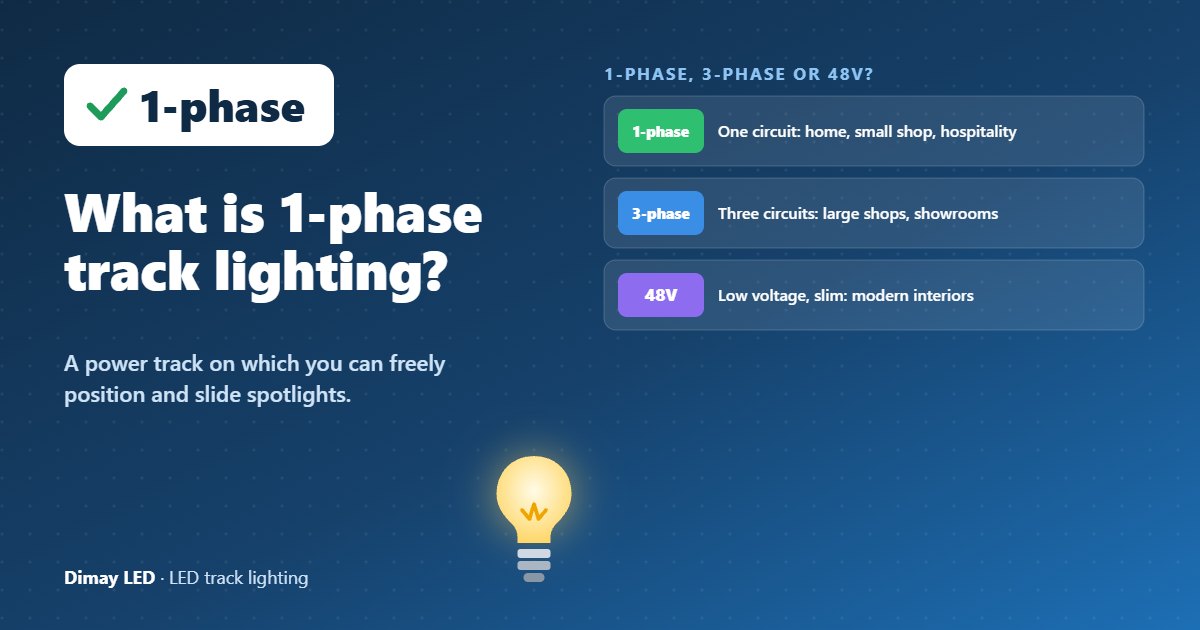
  4. What is 1-phase track lighting?

    Infographic: What is 1-phase track lighting?
    1-phase track lighting is a power track with a single circuit on which you can position and slide spotlights freely. All spotlights on the track switch together.
    Read more »
  5. What is a power cord?

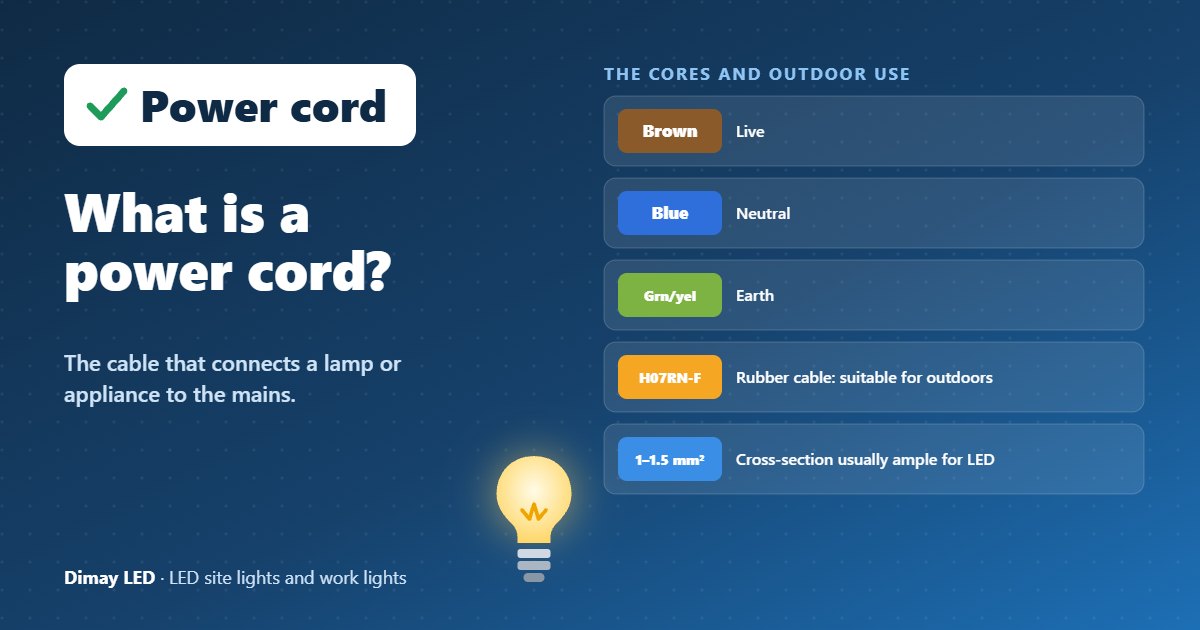
    Infographic: What is a power cord?
    A power cord is the cable that connects a lamp or appliance to the socket or a fixed connection. Outdoors, special waterproof cables are required.
    Read more »
  6. What are the different ways to dim LED?

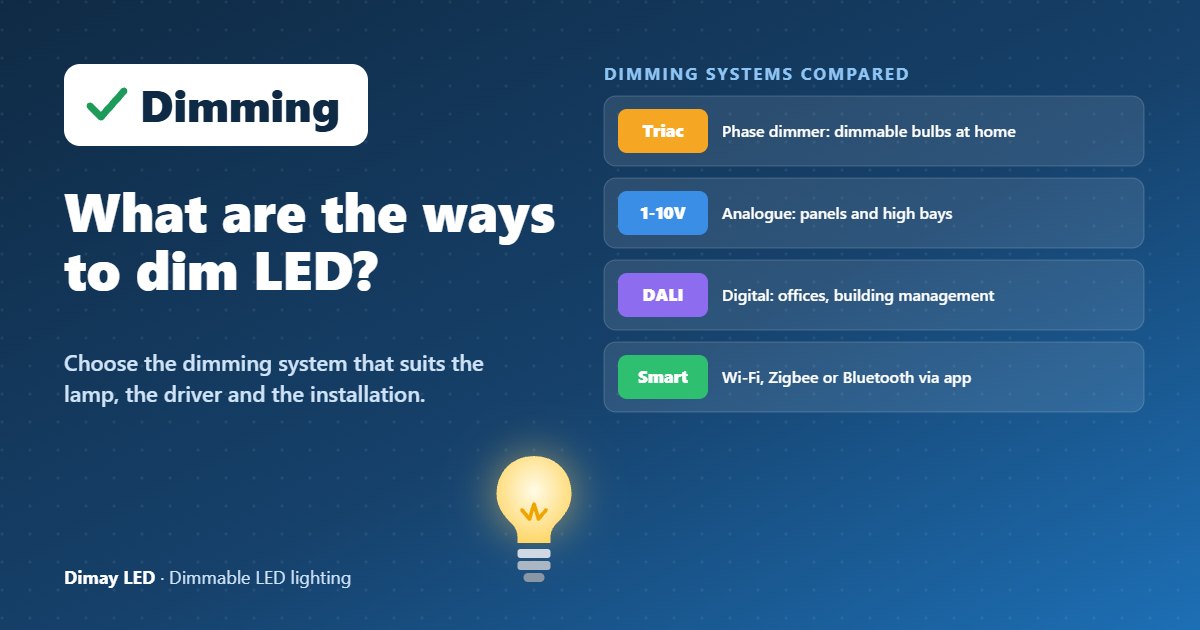
    Infographic: What are the different ways to dim LED?
    You can dim LED with an LED-compatible phase dimmer (triac), with a 1-10V or 0-10V signal, digitally with DALI or wirelessly via smart lighting.
    Read more »
  7. What is a flicker-free LED driver?

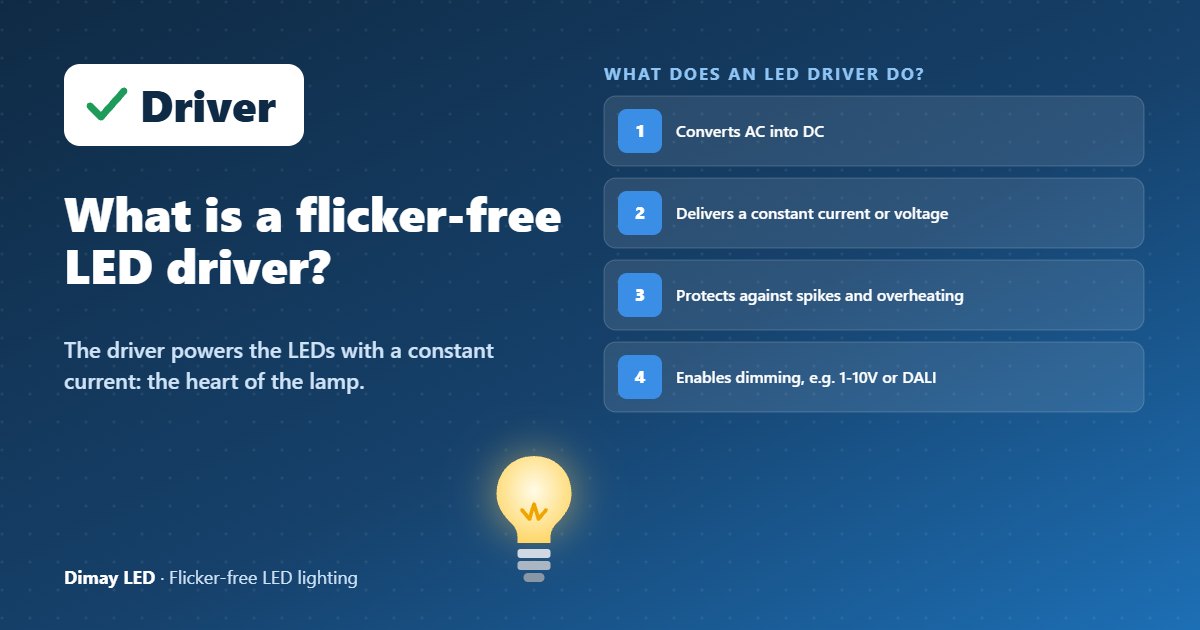
    Infographic: What is a flicker-free LED driver?
    An LED driver converts mains voltage into the right current for the LEDs. A flicker-free driver delivers a very stable current, so the light does not flicker.
    Read more »
  8. What does flicker-free mean in LED lighting?

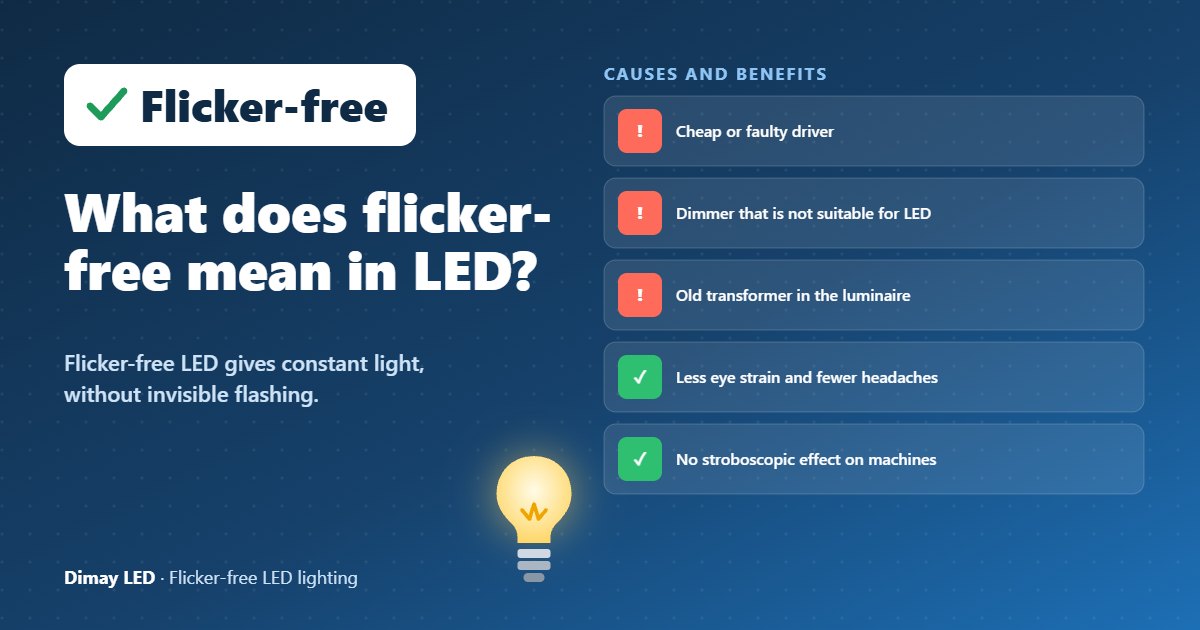
    Infographic: What does flicker-free mean in LED?
    Flicker-free LED lighting gives constant light without (invisible) rapid fluctuations. This prevents eye strain, headaches and stroboscopic effects.
    Read more »
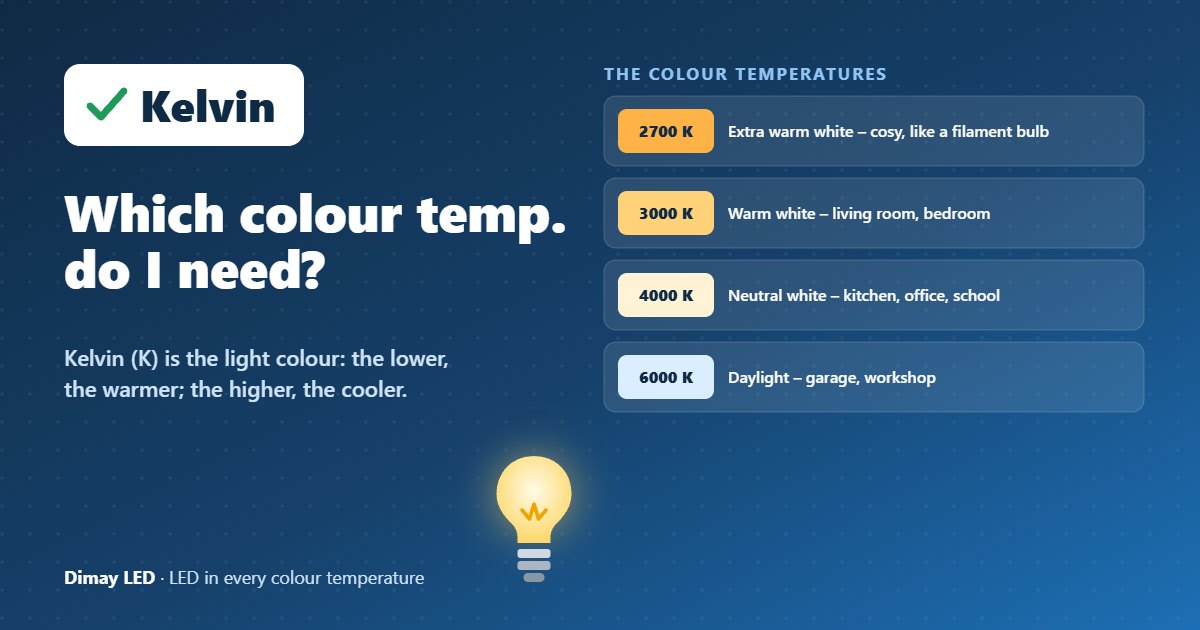
  9. What does Kelvin mean? Which colour temperature do I need?

    Infographic: Which colour temperature do I need?
    Kelvin (K) indicates the colour of light: 2700 to 3000 K is warm white, 4000 K neutral white and 5000 to 6500 K daylight. Each room calls for a different colour temperature.
    Read more »
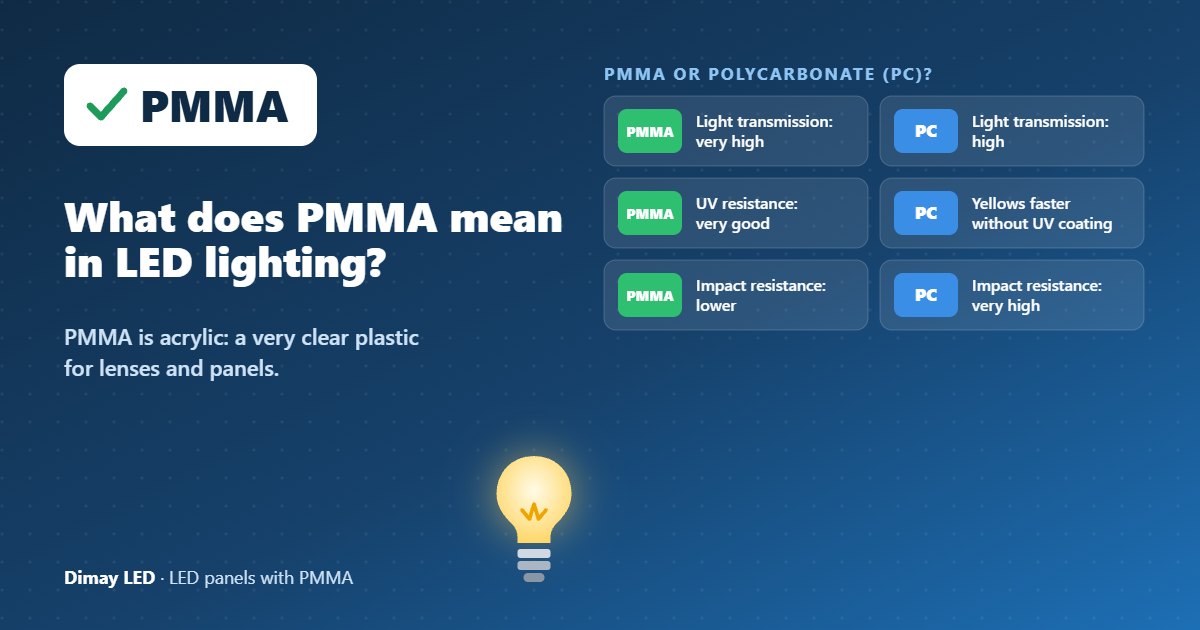
  10. What does PMMA mean in LED lighting and what are the benefits?

    Infographic: What does PMMA mean in LED lighting?
    PMMA is acrylic (Plexiglas): a clear, UV-resistant plastic used for lenses, covers and light guides in LED luminaires.
    Read more »
Page